82 of 174 US peptide clinics sell products the new HHS policy does not allow
HHS now lets US pharmacies make BPC-157 and five other peptides on prescription, with conditions. We read the websites of 174 clinics, telehealth services and doctors that sell them. 82 (47%) sell at least one product the policy does not allow: a blend, or a route it does not list.
Since the policy, there are two ways to buy these peptides in the US. Research-use-only peptides are sold online as lab chemicals, not for people, with no prescription. Prescription peptides are made by a licensed pharmacy for one patient, after a doctor or clinic approves them. The policy is about prescription peptides only, and so is this report. It does not review research-use-only shops, apart from two comparisons: price per mg, and how many publish a lab report. No seller is named on this page.
“Most research-use-only peptide sellers in the US publish a lab report: 140 of 237. We checked 174 clinics that sell the same peptides on prescription, the route HHS now allows. Only 2 publish one.”
The findings in brief
- 45%sell a blendThe policy allows one peptide per product. Nearly half sell blends.
- 168 of 174offer peptides the policy does not coverSix peptides are covered. 168 of 174 sellers offer more.
- 9 of 174name their pharmacyOnly 9 of 174 say which pharmacy makes their peptides
- 0name the factory that makes the raw peptideNot one of 174 sellers says which factory makes the raw peptide
- 2 of 174publish a lab report on their siteOnly 2 of 174 publish a lab report. Most research-use-only sellers do.
- 28offer a route the policy does not allow28 offer a peptide by a route the policy does not allow
The policy allows one peptide per product. Nearly half sell blends.
174 US clinics, telehealth services and doctors that prescribe at least one of the six covered peptides. One square is one seller.
The policy only allows products made from a single peptide. At least 78 of 174 sellers (45%) offer a product that mixes one of the six with another drug substance.
The most common mix is BPC-157 and TB-500 in the same vial, often sold as a "Wolverine" blend. Others add KPV and GHK-Cu, as in "KLOW" or "GLOW".
1 more seller offers a blend but only tells patients what is in it at the consultation. It is not in the 78.
HHS 503A peptide policy, condition 7“The compounded drug product contains only a single Active Pharmaceutical Ingredient (API) listed in Appendix A.”
How we counted
A blend counts only when it is sold as one product: one vial, capsule, spray, or a named stack sold as one item.
Two peptides listed side by side do not count. Nor does a blend that is only mentioned in a patient review, a case story or a list. That rule took 3 sellers out of the count.
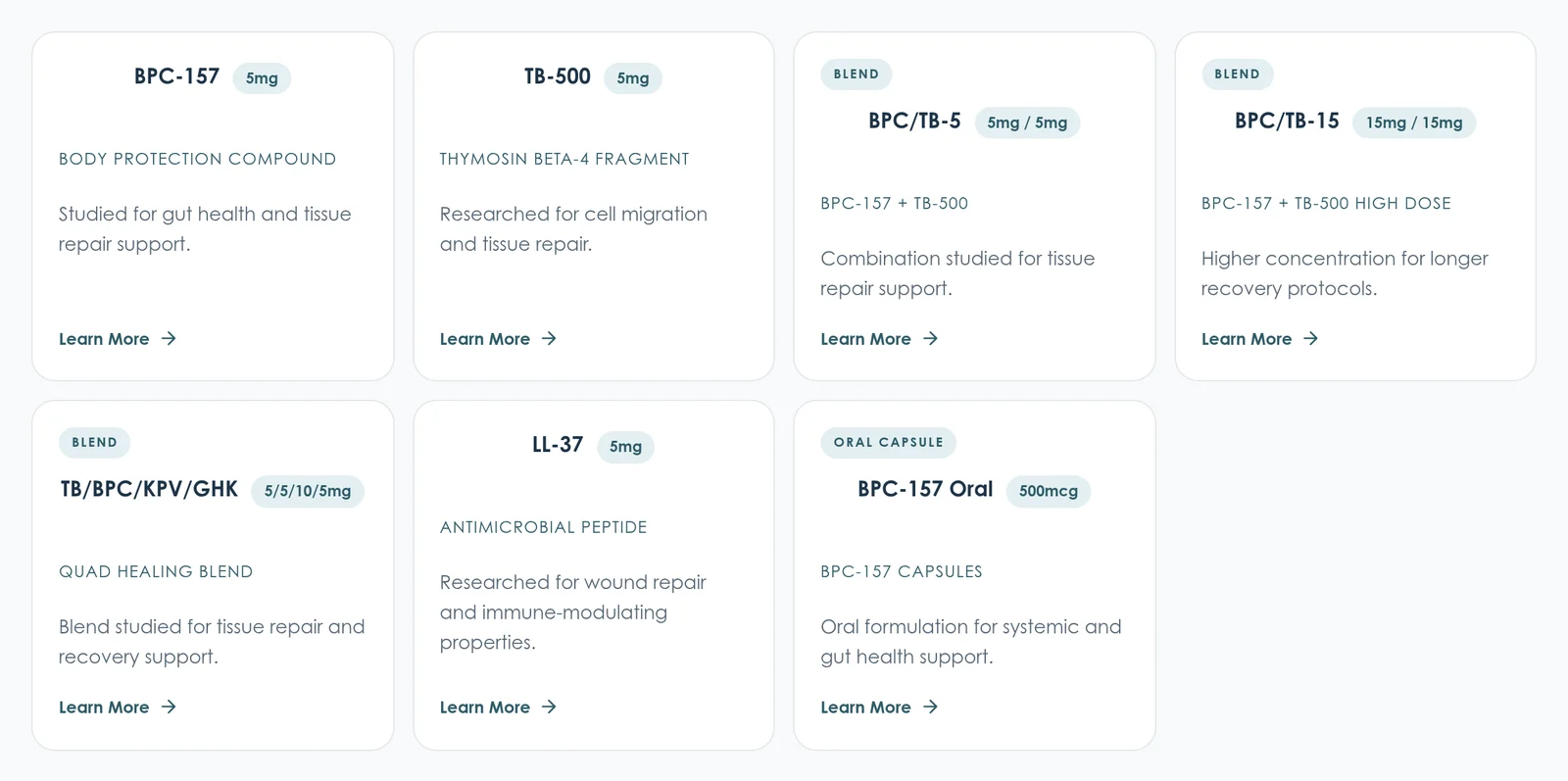
Six peptides are covered. 168 of 174 sellers offer more.
174 US clinics, telehealth services and doctors that prescribe at least one of the six covered peptides. One square is one seller.
The policy names six peptides: BPC-157, TB-500, epitalon, MOTS-c, Semax and KPV. Almost every seller also offers peptides it does not cover, on the same menu.
Common examples are CJC-1295, ipamorelin, tesamorelin, PT-141 and thymosin alpha-1. Only 6 sellers offer the six and nothing else.
HHS 503A peptide policy, condition 1“503A Interim Access List. The peptide bulk drug substance appears in Appendix A to this policy.”
How we counted
Sermorelin, NAD+ and GHK-Cu used on the skin are not counted, since they have their own routes to market. Injectable GHK-Cu is counted.
Only 9 of 174 say which pharmacy makes their peptides
174 US clinics, telehealth services and doctors that prescribe at least one of the six covered peptides. One square is one seller.
A prescription peptide has two makers. A factory makes the raw peptide powder. Then a pharmacy turns that powder into the vial, spray or capsule the patient gets.
The policy covers a drug only when a state-licensed pharmacy, a federal facility or a licensed doctor makes it. But patients buy through a clinic or telehealth website and usually never deal with the pharmacy.
Only 9 of 174 sellers name the pharmacy their peptides come from. For 4 of them, we matched that name to an active state pharmacy licence.
Without a name, a patient cannot look up the pharmacy's licence, or check that it is a 503A pharmacy at all.
Patients pay more for the pharmacy route. Per mg, the median prescription price is 2.1 to 4.3 times the research-use median. See what prescription peptides cost.
HHS 503A peptide policy, opening statement“HHS does not intend to take action against a State-licensed pharmacy, Federal facility, or licensed physician compounding a drug product using a peptide bulk drug substance … when all of the following circumstances are present”
How we counted
We counted a seller when its site names the pharmacy that fills its peptides. A pharmacy named only for other drugs, such as hormones, does not count. Nor does a reading list or a pharmacy named as a dosing source.
We looked up each named pharmacy in its state board's licence search.
Not one of 174 sellers says which factory makes the raw peptide
174 US clinics, telehealth services and doctors that prescribe at least one of the six covered peptides. One square is one seller.
The pharmacy does not make the peptide itself. It buys the raw peptide powder from a factory.
The policy sets rules on where the bulk drug substance comes from and how it is made. A patient can only check that if someone names the maker.
None of the 174 sellers names the company that makes the raw peptide in its products. Some say it comes from "FDA-registered" suppliers or facilities but do not name one.
HHS 503A peptide policy, condition 4“The original manufacturer of the bulk drug substance (not a subsequent packer, repacker, labeler, or distributor) is registered with FDA under section 510, is in compliance with CGMP and other FD&C requirements and the physical location of the facility is listed on the COA provided to the 503A compounder.”
How we counted
We looked for the maker of the bulk peptide (the active ingredient), not the pharmacy. A general line such as "sourced from FDA-registered facilities" does not count.

Only 2 of 174 publish a lab report. Most research-use-only sellers do.
174 sellers. Each bar counts the sellers that show one kind of testing on their site.
The policy wants the raw peptide to arrive with a certificate of analysis: a lab test of identity, purity, strength and contaminants. A patient only sees that testing if the seller shows it. Only 8 of 174 sellers publish a batch certificate or say one is available on request. Only 2 publish lab reports on their site, one for each lot. The rest at most say that a certificate exists.
Research-use-only shops are not made for people, yet most of them show more. In our database, 140 of 237 active US research-use-only sellers (59%) publish at least one lab report that names the lab. Among prescription clinics it is 2 of 174 (1.1%).
11 of 174 say their products are tested for endotoxin or sterility. These are the two checks that matter most for a product that is injected.
HHS 503A peptide policy, condition 3“Characterization. The bulk drug substance is from a facility registered under section 510 (21 U.S.C. § 360) and characterized and identified in a valid certificate of analysis (COA) … tested for identity, purity, potency, and the absence of harmful contaminants such as endotoxins, heavy metals, microbial contamination, and impurities.”
How we counted
A general line about what pharmacies are "required" to do does not count, and nor does a warning about research-grade products. A claim about the seller's own products counts, even without a report.
For the research-use-only comparison, we counted active US sellers in the Peptide Scanner database with at least one collected lab report that names the testing lab, as of 2026-11-01.
28 offer a peptide by a route the policy does not allow
174 sellers. 85 of them say how at least one of the six peptides is given.
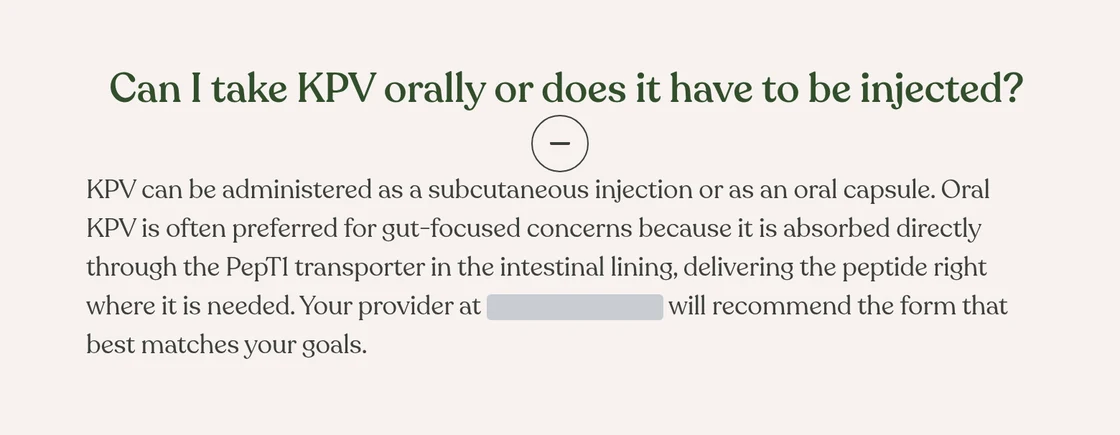
Appendix B of the policy lists the routes allowed for each peptide. KPV is allowed only as a cream or a pill. Semax is allowed only as a nasal spray.
85 of 174 sellers say how at least one of the six is given. At least 28 of those offer a peptide by a route the policy does not allow. KPV by injection (15 sellers) and Semax by injection (13) are the most common.
HHS 503A peptide policy, Appendix B, KPV“… enforcement discretion for KPV acetate is appropriate for topical and oral dosage forms that are compounded from API accompanied by a CoA meeting the conditions of this policy.”
How we counted
A route counts only when the site ties it to a named covered peptide. A general line such as "most peptides are injected" does not count.
We left out 3 sellers whose route text was too vague to judge, so 28 is a minimum.
Which routes the policy allows
| Peptide | Allowed by the policy | Also offered by sellers |
|---|---|---|
| BPC-157 | Injection under the skin or into muscle, oral, topical | Nasal spray, IV |
| TB-500 | Injection under the skin or into muscle | Oral capsules or strips |
| Epitalon | Injection under the skin or into muscle | Oral |
| MOTS-c | Injection under the skin or into muscle | Oral, nasal spray |
| Semax | Nasal spray | Injection |
| KPV | Oral, topical | Injection |
What the policy is
On 30 October 2026 HHS published an enforcement discretion policy for peptide compounding under section 503A of the FD&C Act (FR Doc 2026-22192). It says HHS will not act against a pharmacy that makes one of six peptides, if ten conditions are all met. The policy and its appendices list the conditions in full.
HHS 503A peptide policy, opening statement“HHS does not intend to take action against a State-licensed pharmacy, Federal facility, or licensed physician compounding a drug product using a peptide bulk drug substance … when all of the following circumstances are present”
The conditions sit with the pharmacy, not the seller. They are the single peptide per product rule, the six-peptide list in Appendix A, the routes in Appendix B, a certificate of analysis for the raw peptide, an FDA-registered maker named on that certificate, reporting to FDA, and the label wording. This report checks what a patient can see of those conditions from the outside, before paying.
A product outside these conditions does not get this protection. Blends and routes that Appendix B does not list are outside them.
What we asked HHS to do
We sent these numbers to HHS as a public comment on the policy, docket HHS-OASH-2026-0496. We asked HHS to:
- Require sellers to name the 503A pharmacy and its state licence number before the patient pays.
- Put the raw peptide's maker, facility and lot number on the patient label.
- Require the pharmacy to provide the lot certificate of analysis on request.
- Confirm that blends of two covered peptides in one vial fall outside the policy, and say whether kits of separate vials do.
- Publish the safety and quality reports pharmacies must send under the policy.
- Set a date to review the policy and publish the results.
How we did it
- Who we checked
- 174 US clinics, telehealth services and doctors that offer at least one of the six peptides, and only after a prescription or medical review. We confirmed the review comes before payment at each one. The list and how we built it are on our methodology page.
- What we read
- Each public website in full between 29 October and 1 November 2026, usually 25 to 50 pages: the menu, every peptide and price page, the FAQ, and any quality, pharmacy or testing page.
- Does not allow
- The 82 are sellers with at least one blend (78) or at least one route Appendix B does not list (28). 24 have both. Peptides outside the six are not in the 82: the policy does not cover them, and some are parts of approved drugs with their own rules.
- Six checks
- Blends, peptides outside the six, the named pharmacy, the raw peptide's maker, batch testing, and routes. Every seller has an answer for every check, so every number is out of 174.
- Checks on our checks
- We opened the quotes behind the “yes” answers again on the live sites. A script makes every number on this page from the results files and checks that it matches our HHS comment.
Limits
- Public websites only.
- When we say a seller does not show something, it was not on its public site on the day we looked. It may still be in the seller's own records, or given out at the consultation.
- Counts are minimums.
- Where a site was unclear, we did not count it. The real numbers for blends and routes may be higher.
- Our reading of the policy.
- The routes in Appendix B are as published on FR Doc 2026-22192, 30 October 2026. HHS may clarify them.
- A snapshot.
- Sites change. These numbers are for 29 October to 1 November 2026.
Related pages
Download the data
- hhs-peptide-policy-2026.csvColumns: figure, value, out of, and what it counts.
Cite this report
Peptide Scanner, “82 of 174 US peptide clinics sell products the new HHS policy does not allow”, November 2026, peptidescanner.co/reports/hhs-peptide-policy-2026/. The policy is FR Doc 2026-22192, 30 October 2026.
Press and corrections
Journalists can ask for the seller-level data or the method in full. If a number is wrong or a site has changed, tell us and we will check it. Email media@peptidescanner.co.
Peptide Scanner tracks peptide sellers and pays independent labs to test their products. It does not sell peptides. See also our disclaimer.